Firewall Manual Stitching in ACI

aka Network Stitching. This is the manual method to insert L4-7 services; VLANs, EPGs and bridge domains are manually created, and EPGs are manually assigned to the L4-7 device interfaces, statically with Static Path Binding or dynamically with a VMM domain. If we have to insert more than one L4-7 device, repeat the above process as much as there are devices to integrate.

L4-7 device vs L4-7 Device

An L4-7 device in the manual stitching context is one firewall, one ADC, etc. A L4-7 Device in Service Graphs is the Logical Device, which might contain one or more Concrete Devices.

[Read]

How to Steer Traffic to a Firewall Using ACI L4-7 Service Insertion

If I configure the IP default gateways of the (Provider, Consumer) pair on ACI and attach an L4-7 Device to ACI, IP routing traffic involving the (Provider, Consumer) pair will bypass the Service Device due to routing in ACI itself. To circumvent that, there are three known methods to force traffic toward the L4-7 Device.

Method 1: NAT on the L4-7 Device

Method 2: SGR (no NAT on the L4-7 Device)

Method 3: VRF Sandwich and L3Outs

No NAT on the L4-7 Device.

[Read]

ACI L4-7 Logical Device

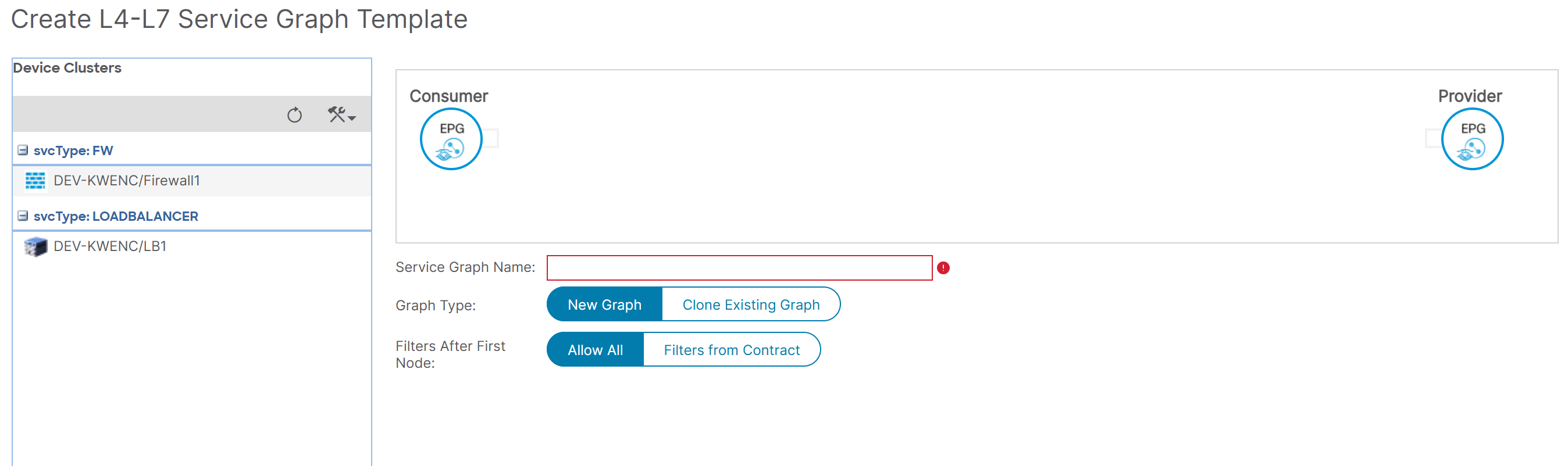
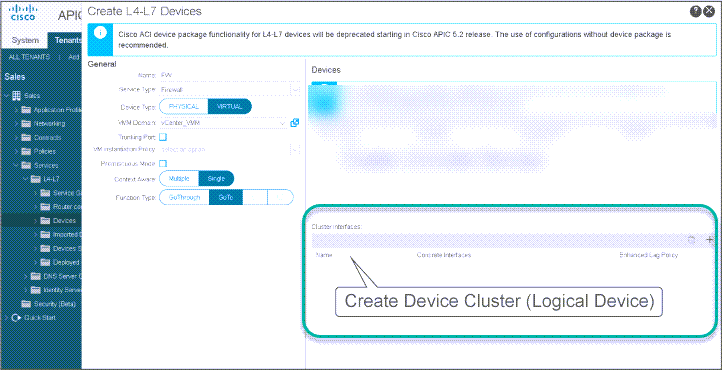
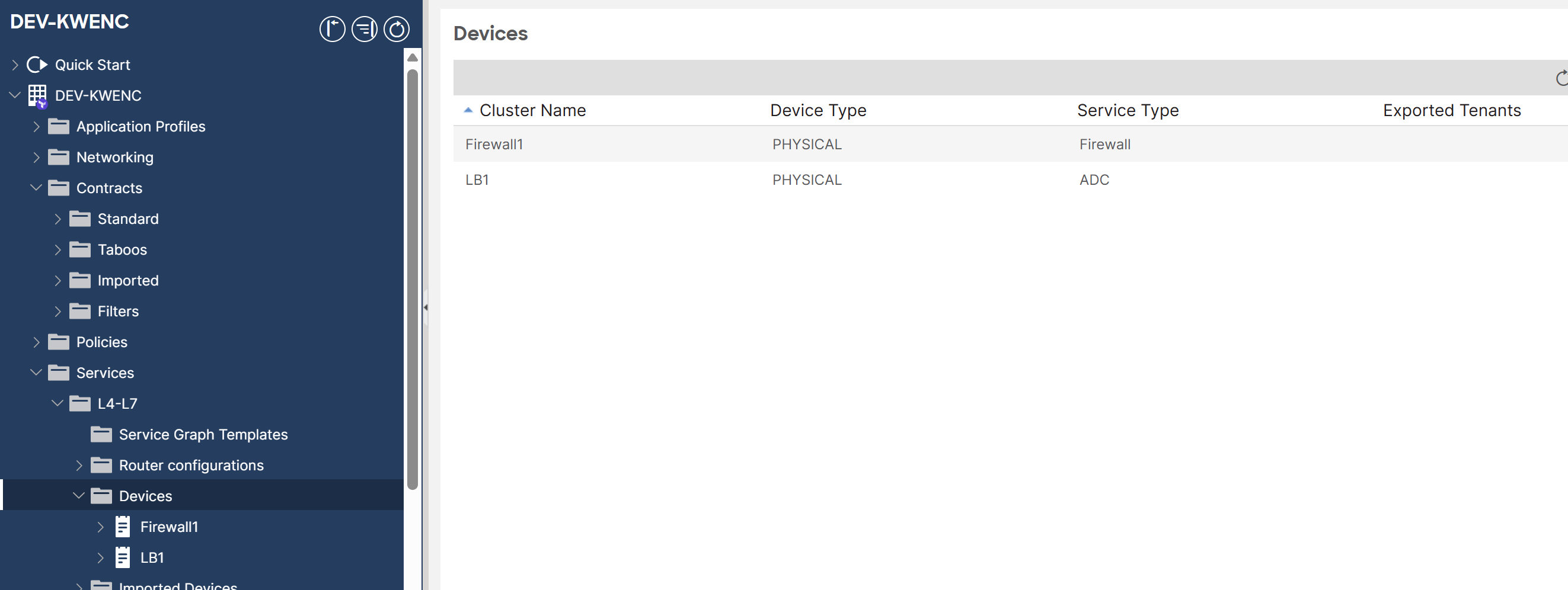
L4-7 Device == L4-7 Cluster Device == Logical Device. This is where we inform ACI about our firewall, ADC, etc. ACI considers service devices as part of application design. That is why we place their functions in EPG pairs or ESG pairs. sc1 The L4-7 Device == the Cluster Device == Logical Device: the ACI logical representation of one or more Concrete Devices that perform the same Service Type. Re-use of a L4-7 Device is possible, whether using its same Cluster interfaces or additional ones.
[Read]

ACI L4-7 Cluster Interfaces

is the logical interfaces of a L4-7 Device Cluster Device. We distinguish Provider Cluster Interfaces and Consumer Cluster Interfaces. The ACI administrator must define them under the Create L4-7 Device page. sc4

Consumer-Side Interface

The Cluster Interface that will attach directly (or indirectly, in case this is not the first L4-7 Device in the Service Graph Template) to the Consumer-side BD.

Provider-Side Interface

The Cluster Interface that will attach directly (or indirectly, in case this is not the first L4-7 Device in the Service Graph Template) to the Provider-side BD. Any Cluster Device will appear as a draggable element when creating a Service Graph Template. sc4 sc5 ❗ ACI does not detect duplicate IP addresses when two Cluster Devices have the same management IP address or VIP.
[Read]

Common Concepts For Cisco ACI Standard Service Graphs and Service Graph Redirects

These are common concepts for Standard Service Graphs and Service Graph Redirects. Service Graph with L4-7 Device in Go-To mode == L3 Service Graph. L4-7 Device in Go-To mode and the SGT has PBR enabled == L3 PBR Node.

Concepts

L4-7 Service Graph

A Service Graph requires the existence of one or more [[ACI Contracts|Contract]]s between a (Provider, Consumer) pair, whether they are EPGs or ESGs. Service Graphs are extensions of ACI Contracts; They leverage the concept of Provider EPG and Consumer EPG. Instead of manual stitching of L4-7 services, ACI can manage service devices just like it manages network policies, including automatic provisioning and removal of services when needed. Service Graph is a concept. requires the Service Graph Template

[Read]

Configuring PKI

Technology Definitions
CSR Certificate Signing Request

Certificates

Issuing a Digital Certificate

Certificate server, Certificate Authority. The entities that want the CA to issue a digital certificate for them must send their public key, their IP address and their FQDN to the CA. The CA replies with a digital certificate, aka identity certificate, aka public key certificate which means ‘I certify that the entity named in this certificate own the public key mentioned in this digital certificate.’ The digital certificate does not last forever; It has a validity period. The digital certificate is a file with the extension .cer.

[Read]

Operations with git

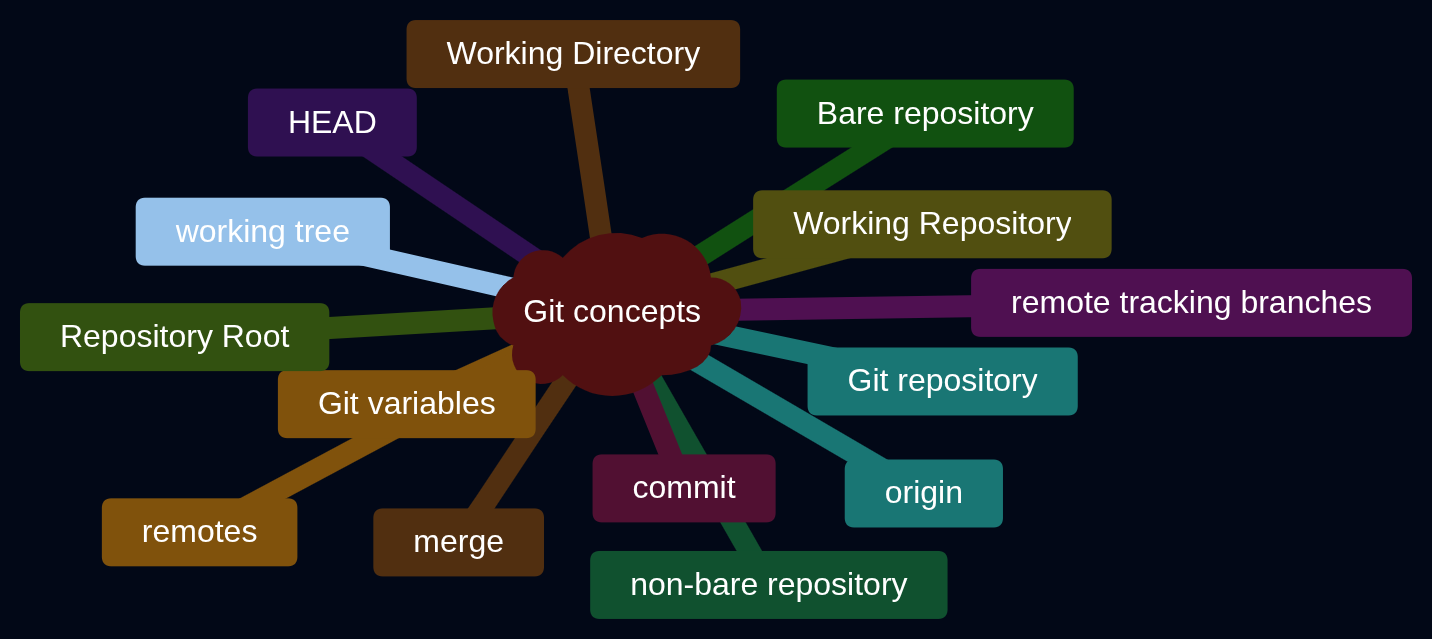
gitterminology.png

Git vs SVC

An SVC is a type of Software Configuration Management (SCM) git is the most popular distributed software version control (dsvc)

Git vs Github

Git is the DSVC (Distributed Software Version Control). Github is a cloud platform that uses Git as its core technology plus additional features like Discussions and Pull Requests.

Using Git

There are CLI tools like Git Desktop and GUI tools like Microsoft Visual Studio Code to use Git. GUI tools have their own limitations.

[Read]

ACI and Active-Active Firewall Cluster in Single-Pod and Multi-Pod Designs

ACI Single Pod, Active-Active Firewall Cluster in Go-To Mode

L4-7 Device Config

A single Concrete Device, one or more Concrete Device Interfaces and one or more Cluster Interfaces, depending on the physical topology. See the document Service Graph Design Guide for ACI 5.2 and Later, page=55.

ACI Multi-Pod, Active-Active Firewall Cluster in Go-To Mode

Stretched Active-Active Firewall Cluster in Go-To Mode, in ACI Multi-Pod Designs

Designing cluster nodes in more than one data center is supported by ACI Multi-Pod. Each ACI pod has one or more firewalls in the active role. See the document ACI Multi-Pod and Service Node Integration, page=5.

[Read]

ACI L4-7 Service Insertion - Active-Standby Firewalls with Standard Service Graphs (SSG) in ACI Multi-Site Designs

Stretched HA Firewall

Cisco supports a stretched Active-Standby firewall system if:

  • ACI operates in layer 2,
  • the firewall operates as the IP default gateway for the endpoints or the firewall operates in Transparent mode or the active and standby nodes are connected with an L3Out.

Independent HA Firewalls

If I have to deploy Active-Standby Firewalls, Cisco recommends to deploy them as independent HA firewalls in the ACI sites (i.e. not across the intersite link)

[Read]

ACI L4-7 Service Insertion of an Active-Standby Firewall in Go-To Mode in an ACI Single-Pod Design

One concrete device per firewall –> 2 concrete devices under the L4-7 device.

If I have a two-arm firewall design: For all Concrete Devices within a L4-7 Device I must map all Concrete Interfaces of the same direction to the Cluster Interfaces ( #PersoNote symmetrical interface mapping):

  • add one Cluster Interface for the Consumer side and associate it with all Consumer-side interfaces of all [[#Concrete Device]]s,
  • add one Cluster Interface for the Provider side and associate it with all Provider-side interfaces of all [[#Concrete Device]]s.

If I have a one-arm firewall design: add one Cluster Interface that includes both Concrete Interfaces of the firewalls. #verifyThis

[Read]